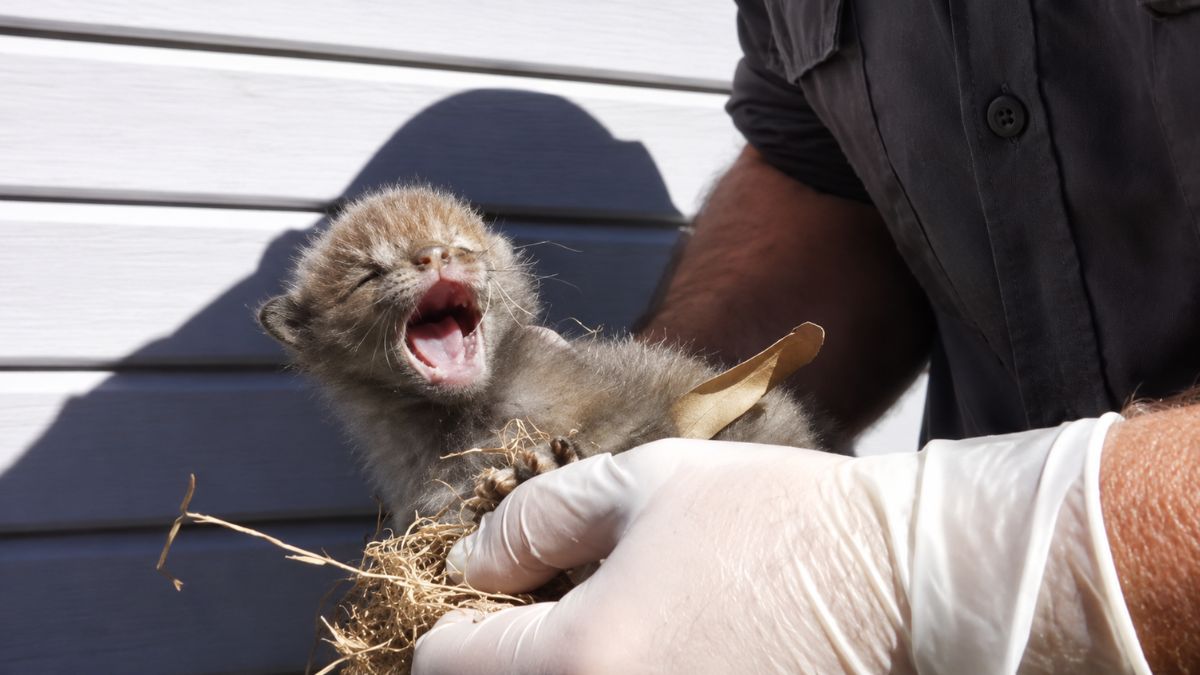
A routine spring wildlife call quickly turned into an emotional rescue after two tiny fox cubs were spotted wandering in a yard during the daytime.
While young foxes often begin exploring outside their dens in spring, these cubs were unusually small, weak, and alone.
The situation became even more worrying when the homeowner noticed a large number of flies coming from beneath a nearby shed. Concerned that something was wrong, they contacted Wildlife Aid for urgent help.
Homeowner Notices Two Vulnerable Fox Cubs
Before calling rescuers, the homeowner had already tried to understand what was happening. Trail cameras were placed near the area in hopes of spotting the cubs’ mother. Sadly, no adult fox appeared for several days.
Without their mother, the tiny fox cubs were at serious risk. Baby foxes depend on their mother for warmth, food, protection, and survival.
Their small size and daytime wandering suggested they were hungry, weak, and possibly orphaned.
That is when Wildlife Aid rescuers Louis and Dan rushed to the property.
Rescuers Search Beneath the Shed
When the rescuers arrived, they quickly focused on the shed where the flies had been seen. The fox cubs had been coming from underneath it, and the team knew every minute mattered.
Getting the babies out was not easy. The cubs were hidden in a tight, difficult space under the structure. Rescuers had to work slowly and carefully to avoid frightening or injuring them.
For nearly an hour, Louis and Dan tried to reach the vulnerable cubs. Finally, they managed to pull one tiny baby fox from beneath the shed. Moments later, they rescued the second cub.
At first, it seemed like the rescue was complete.
Thermal Camera Reveals More Babies
After removing the first two cubs, Louis used a thermal imaging camera to check the space under the shed one more time. What he saw shocked everyone.
There were still heat signatures beneath the shed. The rescuers realized there were more babies hidden below — not just one more, but three additional fox cubs.
These remaining cubs were even smaller and weaker than the first two. Louis reached under the shed again and gently pulled out each baby, one by one.
The rescuers were heartbroken by their condition. One cub was extremely cold, showing just how dangerous the situation had become.
Five Fox Cubs Safely Removed
By the end of the rescue, Louis and Dan had removed five fox cubs from beneath the shed. Some were stronger than others, but all of them were alive.
The team immediately rushed the orphaned litter to Wildlife Aid’s hospital, where the cubs received urgent medical attention. Veterinarian Judith carefully examined each one and made sure they were warm, safe, and stable.
After their checks, the cubs were placed together in an incubator. There, they finally snuggled close to each other and fell asleep.
A Long Road to Recovery
Although all five cubs survived the rescue, some needed extra care. Being without their mother for several days had left them weak and vulnerable.
Wildlife Aid staff began providing the food, warmth, and medical support the cubs needed to recover. The goal is to help them grow strong enough to eventually return to the wild.
For now, the little fox family remains in expert hands. Their rescuers will continue caring for them, watching their progress, and celebrating each small milestone.
Why This Rescue Matters
This rescue shows how important it is to call trained wildlife experts when young animals are found alone. While it may be tempting to step in immediately, professional rescuers know how to check for hidden babies, assess danger, and provide the right care.
In this case, two visible cubs led rescuers to discover three more who might not have survived much longer.
Final Thoughts
What began as a call about two tiny fox cubs turned into a remarkable rescue of five orphaned babies hidden beneath a shed.
Thanks to the quick response from Wildlife Aid, the entire litter was saved before it was too late.
The cubs still have a journey ahead before they can return to the wild, but they are now warm, safe, and receiving the care they need.
Their rescue is a powerful reminder that even the smallest lives are worth protecting.