



Art and soul at the history museum
Folk art exhibit reveals the ‘put it out there spirit’ of the Gullah South
MARCH 22, 2012 2:09 p.m.  (0)
(0)


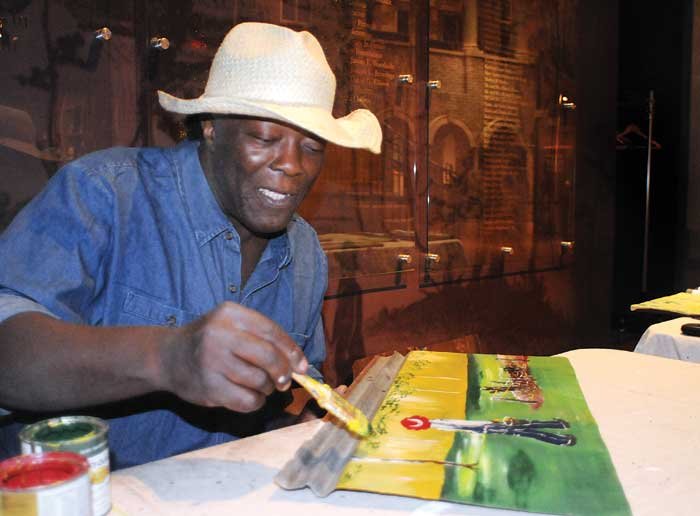
What started as a few pieces here and there has grown into a 500-piece folk art collection, a sampling of which is on loan to Greenville’s Upcountry History Museum for the Uniquely Southern Folk Art exhibit running until Sept. 2.
Blackwell’s collection includes pieces by Pendleton artist Richard Burnside and Greenville artist William Thomas Thompson, as well as pieces by Jimmy Lee Sudduth, Bernice Sims, Mose Tolliver, Leonard Jones, Lonnie Holley and a host of others.
Blackwell traveled all over the South, acquiring most of his pieces directly from the artists. “I went and connected with these people,” he said. “I found a similar thread in all of them. They were gregarious and loved having you admire what they did. Most of it was soulful and from the heart and extremely personal.”
The artists typically lived in poor housing and used whatever they could find to carve with or paint on: scrap wood, roofing tin, cardboard, old doors.
Blackwell sat and bent an ear, making friends and often videotaping visits for what eventually became a documentary a decade in the making called, “All Rendered Truth: Folk Art in the American South.”
His film tells the story of twenty Southern folk artists.
Bernice Sims told him stories about being a single mother and her involvement in the Selma march for civil rights in Alabama. He watched Jimmie Lee Sudduth mix mud and honey together and use his fingers to paint on wood. “Everything he did had a story behind it,” Blackwell said.
“These artists have a flow about them, a raw uninhibitedness. They get up every morning with a desire to create, and don’t do it for anybody but themselves. In the early days a lot of them were surprised when people wanted to buy their work. R.A. Miller would literally throw things in your car. You had to make him take money for it. He just loved for you to come visit.”
The transition to adulthood tends to leech away the creative abandon that was a part of childhood, Blackwell said. “Children will tell you what is on their mind. They color an elephant purple or paint a cat pink because they like the color. As adults we try to stay in the lines. But these artists, they have a ‘put it out there spirit’ that keeps them young at heart.”
Blackwell’s professional career has mirrored the creative spirit of his artists. Inspired by “Willy Wonka and the Chocolate Factory,” he began selling handmade chocolates to neighbors out of his wagon at seven years old.
He baked pies to pay for college, opened a restaurant and coffee shop called Immaculate Consumption on Main Street, Columbia, became the 9th distributor in the country for Ben & Jerry’s Ice Cream, started and sold Little River Roasting Company, now located in Spartanburg, and finally founded Immaculate Baking Company in 1995.
The cookie company he started in his garage with $10,000 now tops $3 million in sales, with a full line of natural and organic cookie dough, brownie dough, buttermilk biscuits, and scones that are carried in grocery stores nationwide. His passion for folk art even made it onto the packaging.
“To me the artists are storytellers. It’s a very vernacular art. It is a glimpse inside typical rural life, which a lot of us have never experienced,” Blackwell said.
Heather Yenco, museum educator at Upcountry History Museum, said folk art can be misunderstood.
“This is a very unique group of people who lived through the civil rights movement and a lot of other really important parts of history,” she said. “When I started working on the exhibit, I had the same reaction that most people do when you see this work. But once you start learning about the work and these people’s personalities, you see why they are creating and you get a deeper appreciation of what they’ve done.”

MARCH 7, 2011 7:16 a.m. (0)
FEBRUARY 3, 2011 3:39 p.m. (0)
| Comments |
|
3.26 Copyright (C) 2008 Compojoom.com / Copyright (C) 2007 Alain Georgette / Copyright (C) 2006 Frantisek Hliva. All rights reserved."

3 resign from Greenville disabilities board
MAY 11, 2012 8:40 a.m. (42)
New technology keeps hearing-impaired 'in the loop'
MAY 11, 2012 8:45 a.m. (1)
Greenville aims to become a technology hub
MAY 11, 2012 9:02 a.m. (0)
MAY 11, 2012 8:52 a.m. (2)
Lawmakers rush to clean up election mess
MAY 11, 2012 9:00 a.m. (0)

Business Licenses
City Elected Salaries
City Salaries
College Crime Report
County Elected Salaries
County Salaries
Court Dockets
Crime Blotter
Death Row
Drug Money
Executed
Expulsions
Family Court Filings
Lottery Money
Most Wanted
Nursing Homes
Out of School
Suspensions
Pardons
Parole Hearings
Political Contributions
Recent Recalls
Restaurant Inspections
SC DOT Cameras
School Profiles
School Salaries
Searchable Zoning Map
Sex Offenders
State Public Salaries
State Staff Salaries