



Ready for what’s next
Sealevel keeps it local, moves forward
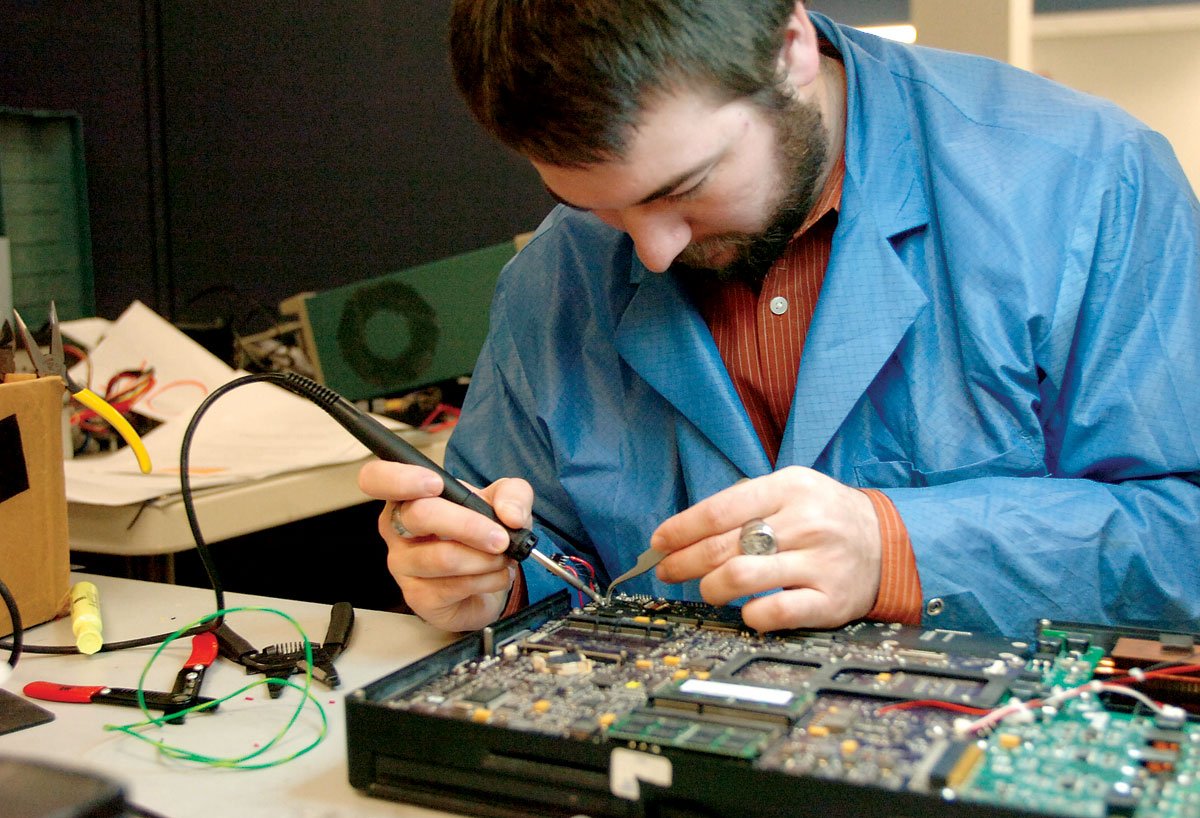
FEBRUARY 12, 2010 8:25 a.m.  (1)
(1)


Textiles largely vanished from the domestic economy, but the market for devices linking computers to equipment in harsh industrial and military environments grew exponentially and with it, Sealevel.
The family owned company’s 3,000 clients range from the Pentagon to Clear Channel to FedEx.
From that first RS-422/485 interface, Sealevel has grown to annual revenues of around $20 million from more than 300 products.
“That’s what has put us in this position to sell to the military and all these markets because that textile environment is as harsh as any environment in Iraq or Afghanistan or Upstate New York,” said Ben O’Hanlan, 33, the son of Tom and Susan O’Hanlan, who stepped back in their 50s to give daily control to Ben.
In addition to expansion taking place now, Sealevel plans in the next 12 months to bring the manufacturing of circuit boards in-house to gain better control of quality, cost, customer service and inventory, O’Hanlan said.
The company is investing $1 million in new equipment and will add three to five more workers for the circuit board project, he said.
“I feel like our core business, serial and digital I/O has a more finite available market,” said O’Hanlan. “We recognize that and over the last years we’ve tried to move up the food chain offering more of the complete computing solution.”
O’Hanlan does not mean competing with PC makers like Dell and HP but rather building off its strength to develop industrial products that do basic applications in solid state systems without fans and hard drives, the cause of “about 99 percent of your computer failures.”
“The idea is that in an industrial environment if you can get the fan out, if you can get the hard drive out, then you have a solution that can run 24 hours a day.”
What Sealevel’s military and industrial customers want and need, he said, are durable American-made products “that can’t fail.”
“What’s happened to that market is that the computer has become the commodity, and the ability to know how to talk to all these different peripheral devices is what has made us unique and has allowed us an advantage against our competition,” he said.
O’Hanlan cites recent major success in winning a subcontract from VT Milltope of Hope Hull, Ala., an established defense contractor.
In October, Milltope, which built 40,000 earlier versions of heavy duty diagnostic laptops for the Army, won a $500-million, five-year contract to build up to 42,000 docking stations with an optical drive, USB and printer ports and a modem to provide additional functionality.
“What happened with Milltope,” said O’Hanlan, “is that they said we don’t have enough time to develop the laptop and the dock station” so they asked Sealevel to do it.
Sealevel added 5,000 square feet to its plant, invested $100,000 in new equipment and will add six to eight employees to a workforce now numbering just under 50. Starting in late April, Sealevel will start producing 200 docking stations every week for five years.
“This is a big contract for us,” said O’Hanlan. “It will put us up 35-40 percent.”
Sealevel in 2008 won a defense contract for a USB/serial port cable with a heavily encased circuit board to link laptops to tactical radios of any manufacturer for data transmission by radio signal instead of by satellite.
The contract has a procurement budget of $4 million in the initial order with the potential of additional purchases up to $11 million. The multi-radio/computer interface is not easy technology and took seven years to perfect, O’Hanlan said.
It was a market dominated by Harris Corp. of Melbourne, Fla., a giant in commercial and defense work with $5 billion in revenues and 15,000 employees.
“The problem that the military did not like is that you had to have a Harris radio on each side, and you had to use the Harris cable,” O’Hanlan said. “The Harris cable assemblies were $10,000-$12,000, so the government tapped us to design an alternative product that allows use of any radio, and we came in under $1,000, and we performed more reliably and at data rates that were faster than Harris’ solution.”
Defense, which contributes 60 percent of Sealevel’s revenues, “has definitely raised the water level and allowed us to pursue other opportunities in other markets so we can maintain that balance.”
Sealevel also monitors towers erected to intercept incompatible transmissions of police, fire and EMPs and convert them to common language, obviating expensive standardization of radios to solve a problem made evident by responders to 911 attacks.
To keep its edge, O’Hanlan said, Sealevel maintains a “50-50 split in terms of engineering hours spent on custom products versus standard products” with one group “constantly turning out things” to bring in revenue with standard products and another working to modify or create new ones for new markets.
He said the company maintains a mix of senior employees, some of whom have been with the company from the beginning, and new employees.
In an industry where even start-ups without profits get gobbled up, the O’Hanlan family has kept control for nearly 25 years and “as long as we keep growing and keep performing, no one is interested in changing,” said Ben O’Hanlan.
What raiders “pick up on pretty quickly” is that Sealevel is a “lifestyle business for everybody” – stockholders, employees and the community – and that “we are not interested when it comes to acquisition opportunities.”
A review in December of management and compensation by Elliott Davis, a Greenville accounting and consulting firm, found Sealevel is unique and different in higher wages and giving more to charity than other companies of its size and type.
“I was pretty proud of what came back because you look at it that and say, ‘that’s the type of company we want to be,’” O’ Hanlan said.
Sealevel also offers fully paid health and dental coverage, a 3 percent 401K contribution whether employees contribute or not, 11 holidays a year and profit-sharing paid quarterly to all employees whether they are in revenue-producing departments or not.
Sealevel holds company breakfasts or luncheons two or three times a quarter out of the workplace in a house nearby on its 17-acre property.
O’Hanlan, who started in the company assembling boxes at age 10 and has worked “just about every job at the company except designing circuit boards or writing codes,” worked in sales for Datastream (now Infor) after graduating from the University of Colorado with a degree in American history. He rejoined Sealevel in 2001.
Although his parents have turned over operational control, their influence is very much present.
Tom O’Hanlan’s love of blues and his association with Rolling Stone keyboardist Chuck Leavell, whose late 1970s band Sea Level inspired the company name, are present in wall art and promotions using Leavell as spokesman.
Office walls feature American contemporary art selected by his mother, Susan O’Hanlan, whose Pelter Gallery in Greenville’s West End was a popular stop on the city’s artistic circuit.

Finding their forever families
JULY 9, 2012 11:45 a.m. (6)
JUNE 21, 2012 10:23 a.m. (3)
Old textile buildings in West End to get new life
JUNE 21, 2012 10:20 a.m. (4)
| Comments |
|
|
||||||||
3.26 Copyright (C) 2008 Compojoom.com / Copyright (C) 2007 Alain Georgette / Copyright (C) 2006 Frantisek Hliva. All rights reserved."


Business Licenses
City Elected Salaries
City Salaries
College Crime Report
County Elected Salaries
County Salaries
Court Dockets
Crime Blotter
Death Row
Drug Money
Executed
Expulsions
Family Court Filings
Lottery Money
Most Wanted
Nursing Homes
Out of School
Suspensions
Pardons
Parole Hearings
Political Contributions
Recent Recalls
Restaurant Inspections
SC DOT Cameras
School Profiles
School Salaries
Searchable Zoning Map
Sex Offenders
State Public Salaries
State Staff Salaries