Social Security Cuts Could Top $500 a Month in 28 States — but There’s Still Time to Act
 Merci
·
September 11, 2026
·
3 min read
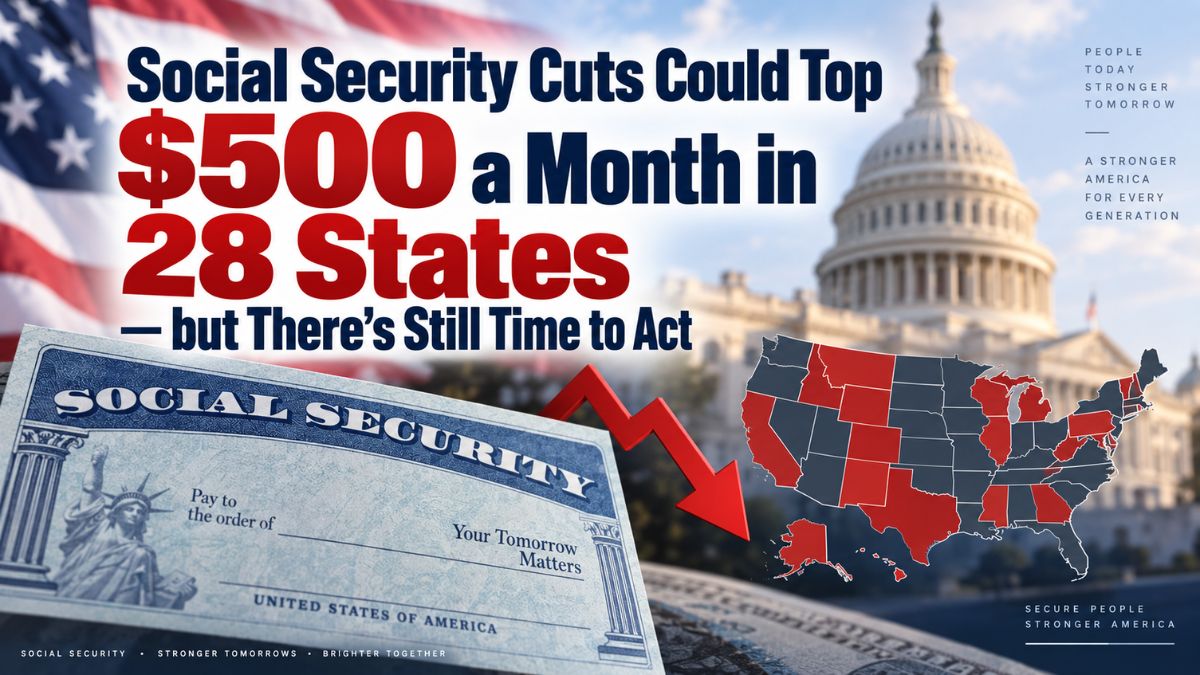
Social Security could face a major funding problem within the next six years if no changes are made to the program. Under a worst-case scenario, benefits could be reduced by around 22% across the board.
Such a reduction would cut average monthly Social Security payments by more than $500 in 28 states and Washington, D.C. Some retirees receiving higher-than-average benefits could potentially lose even more.
However, these cuts are not guaranteed and are considered unlikely because lawmakers are expected to take action before reductions of this size become necessary.
28 States Where Average Social Security Cuts Could Exceed $500
According to estimates from the Committee for a Responsible Federal Budget, average monthly benefit reductions could reach at least $500 in the following states if a 22% cut were implemented:
- Connecticut — $556
- New Jersey — $554
- New Hampshire — $553
- Delaware — $549
- Maryland — $541
- Washington — $531
- Minnesota — $530
- Massachusetts — $527
- Michigan — $523
- Utah — $523
- Virginia — $522
- Kansas — $520
- Pennsylvania — $519
- Rhode Island — $519
- Vermont — $516
- Colorado — $515
- Indiana — $515
- Wisconsin — $513
- Wyoming — $512
- Arizona — $511
- New York — $511
- Nebraska — $509
- Illinois — $507
- South Carolina — $505
- Iowa — $504
- Oregon — $504
- Hawaii — $501
- North Carolina — $501
Washington, D.C. could see an average monthly reduction of approximately $506.
These figures are averages rather than guaranteed individual losses. A person’s actual reduction would depend on the amount of Social Security benefits they currently receive.
Are Social Security Benefits Really Likely to Be Cut by 22%?
A reduction of this size is possible if Social Security’s financial problems remain unresolved, but such a scenario is considered unlikely.
The federal government is expected to intervene before major automatic benefit cuts occur. Any solution, however, could involve difficult financial decisions.
Possible measures could include increasing the amount of Social Security taxes collected from workers or making other changes affecting retirees and higher-income beneficiaries.
Higher payroll taxes could also make it more challenging for younger workers to build their own retirement savings.
What Could Happen to Social Security Instead?
Congress has not yet agreed on a long-term solution for improving Social Security’s finances.
For now, current beneficiaries can generally expect their monthly payments to continue normally over the next several years. Benefits may also continue receiving annual cost-of-living adjustments, or COLAs, each January.
Once lawmakers announce a long-term plan, both current workers and retirees may need to reconsider their financial strategies.
Depending on the final changes, households may need to:
- Increase retirement savings
- Reduce future expenses
- Delay retirement
- Adjust retirement income expectations
There is currently no confirmed timeline for when major Social Security reforms could take effect. The timing will depend largely on when Congress is able to approve a plan with enough political support.
Why Personal Retirement Savings Still Matter
The uncertainty surrounding Social Security makes personal retirement savings increasingly important.
Workers should consider saving as much as possible through retirement accounts and other investments rather than depending entirely on Social Security for future income.
Retirees should also keep monitoring potential policy changes because future adjustments could affect monthly income, taxes, or retirement planning.
Could Retirees Increase Their Social Security Benefits?
Some retirees may be able to increase their lifetime Social Security income by making more strategic claiming decisions.
Certain claiming strategies could potentially increase annual retirement income significantly. One example cited suggests that maximizing Social Security benefits could produce up to $23,760 in additional annual income in some circumstances.
The actual benefit available to each person will depend on factors such as earnings history, retirement age, and claiming decisions.
A 22% Social Security benefit reduction would create serious financial challenges for millions of retirees, with average monthly losses exceeding $500 in 28 states and Washington, D.C.
While cuts of this magnitude are unlikely to happen without government intervention, Social Security’s long-term funding challenges remain important.
Workers and retirees should continue building personal savings, monitoring legislative developments, and reviewing their retirement plans as future changes become clearer.
