Age Pension Spending Forecast to Drop Sharply in Coming Years
 Merci
·
September 9, 2026
·
3 min read
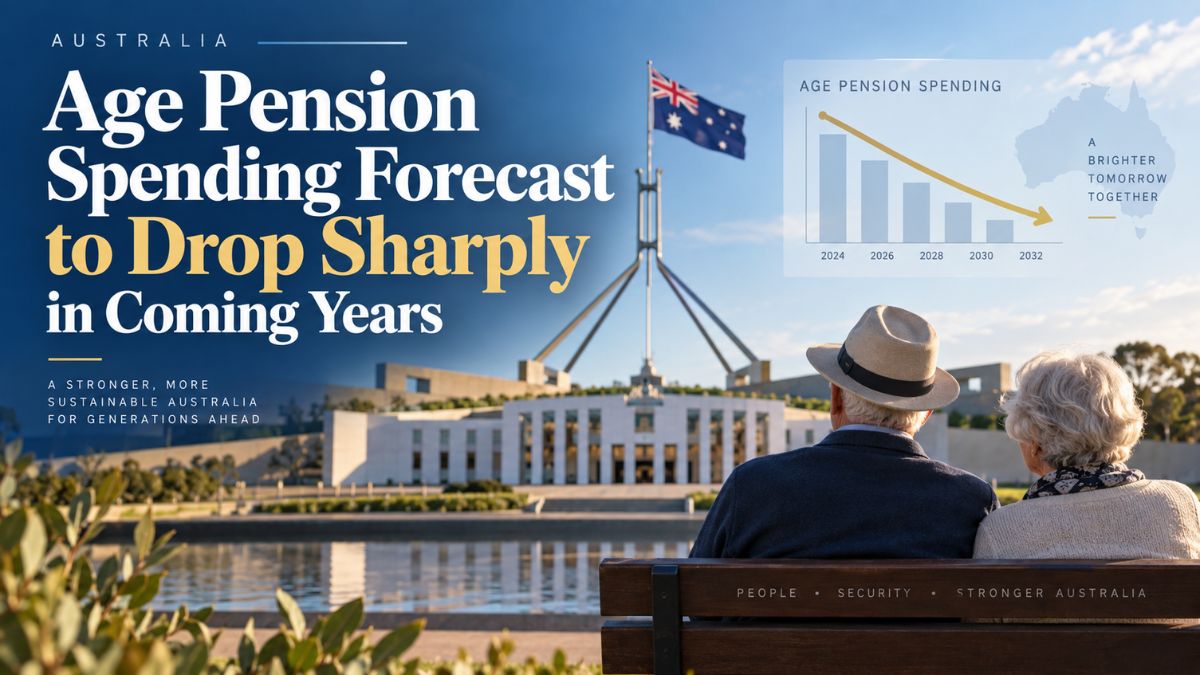
Government spending on Australia’s Age Pension is expected to decline as a share of the economy over the coming decades, despite the number of people reaching pension age almost doubling.
Treasurer Jim Chalmers revealed the projections during a September 9 speech to the Super Members Council, offering an early look at figures from the Intergenerational Report.
Pension-Age Population Could Reach Nine Million by 2066
According to the projections, the number of Australians above Age Pension age is expected to rise to around nine million by 2066, almost twice the current level.
Despite this increase, spending on age and service pensions is forecast to decline from 2.3 per cent of gross domestic product (GDP) to 1.8 per cent by 2066.
Chalmers attributed much of the reduction to the continued growth of Australians’ superannuation balances.
He compared Australia’s projected pension expenditure with other countries, saying equivalent spending could reach almost 10 per cent of GDP in the UK by 2060, around 8 per cent in Canada, 7 per cent in New Zealand and 6 per cent in the United States.
The Treasurer also said that if Age Pension expenditure remained at its current proportion of GDP, annual government spending would be approximately $31 billion higher by 2066.
Chalmers Defends Compulsory Superannuation
Chalmers used the speech to strongly support Australia’s compulsory superannuation system amid renewed debate over whether workers should be allowed to access part of their contributions.
He said having superannuation at the centre of the retirement income system would help Australia maintain relatively low pension spending while improving financial security for retirees.
According to Chalmers, superannuation reduces pressure on government social security spending and contributes to the long-term sustainability of the federal budget.
Median Super Balance Could Approach $450,000
The Treasurer also forecast that the median superannuation balance at retirement age could approach $450,000 within the next decade.
That would represent a substantial increase from slightly more than $200,000 in the latest available data and around $115,000 a decade earlier.
Chalmers argued that these growing balances demonstrate the long-term benefits of preserving compulsory superannuation contributions.
One Nation Proposes Access to Part of Super Contributions
The debate follows a One Nation proposal that would allow workers to redirect 3 per cent of their salary contributions into their bank accounts for up to three years.
With compulsory super contributions currently at 12 per cent, this would effectively allow workers to receive one-quarter of their contributions as cash.
One Nation leader Pauline Hanson said the measure was designed to assist workers struggling with cost-of-living pressures.
Under the proposal, people choosing the option would receive the redirected amount directly from their superannuation fund.
Coalition Figures Respond to Super Proposal
Liberal leader Angus Taylor has not supported the proposal and has said he does not want to change how superannuation is currently paid.
However, Shadow Minister for Housing Andrew Bragg told News24 that he had long been skeptical of Australia’s superannuation system and supported allowing people to use super to reduce their mortgage.
Chalmers criticised One Nation’s proposal and also questioned supportive comments about changing compulsory super arrangements.
He described the current debate as one of the most significant challenges to the compulsory super system since its introduction four decades ago.
Modelling Warns Workers Could Lose Thousands by Retirement
Separate modelling from the Super Members Council suggests accessing 3 per cent of contributions for three years could leave workers substantially worse off later in life.
According to the modelling, a median full-time worker taking advantage of the proposal could have around $25,000 less by retirement.
For a couple, the combined reduction could exceed $50,000.
Super Members Council chief executive Misha Schubert criticised the proposal, arguing that treating superannuation as a source of short-term cash would reduce retirement savings while potentially worsening inflation, interest rates and cost-of-living pressures.
Australia’s ageing population is expected to place growing demands on the retirement system, but stronger superannuation balances could significantly reduce pressure on government Age Pension spending.
The latest projections highlight the importance of compulsory superannuation in the federal government’s long-term retirement and budget strategy, while proposals to allow earlier access to contributions continue to generate political debate.
