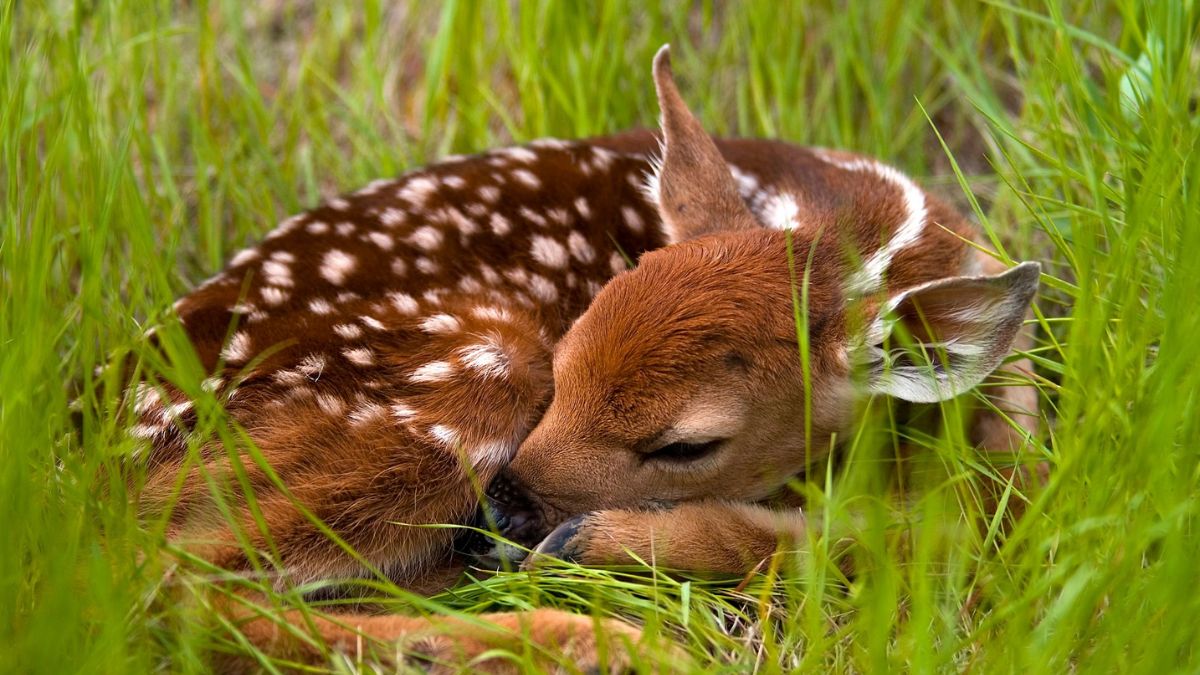
Spring and summer bring a burst of new plant life to gardens, but they also mark the arrival of young wildlife, including deer. Female deer typically give birth to one or two fawns each year, usually in May or June, and spend the following months nurturing them as they grow.
Although deer are social animals, it is very common to see a fawn alone—especially in its early weeks. If you come across a young deer resting quietly in your yard or nearby area, there is usually no need to intervene. In most situations, the fawn is safe and does not require help.

However, wildlife specialists point out that there are certain cases where professional assistance is necessary. Understanding when to step in—and when to leave the animal undisturbed—is essential.
Why Baby Deer Are Often Left Alone
A mother deer leaving her fawn alone is not neglect. After spending the first six to eight hours together after birth, it is normal for the fawn to remain hidden while the mother moves away.
According to wildlife experts, the mother stays nearby but out of sight, either feeding or resting. She typically returns only to nurse and clean the fawn, often during dawn and dusk.

Fawns are born without a strong scent, which helps protect them from predators. If the mother stays close, her scent could attract danger to the baby. For this reason, she often places the fawn in safe locations such as tall grass, under shrubs, or even near homes or fences.
Young fawns also rely on their environment for temperature regulation. Since they cannot control their body temperature effectively, they may lie in the sun for warmth and move into shade to cool down. Their limited strength prevents them from following their mother, who must roam to find food and care for other fawns.
How to Evaluate a Fawn’s Condition
Even if a baby deer appears fragile or unsteady, it is usually healthy. In their first weeks, fawns rely on remaining completely still to avoid detection. This behavior is a natural defense mechanism, not a sign of injury.
Newborn fawns are small, typically weighing between 6 and 8 pounds, and may appear weak or shaky when they attempt to stand or walk. This unsteady movement is normal and not a cause for concern. As long as the fawn can hold its head upright, it is likely in good condition.
By the time a fawn reaches two weeks of age, it should begin to run away when approached. After two to three weeks, the mother usually keeps the fawn closer, and you may start seeing them together more often.
As summer progresses, fawns grow rapidly. By late summer, they begin losing their spots and become independent enough to survive alongside the herd.
How to Tell If a Baby Deer Needs Help
Although most fawns do not require assistance, there are certain warning signs that indicate a problem.
Listen for Crying
A fawn that is calling out frequently may be hungry or in distress. Mothers typically return only twice a day to nurse, so prolonged crying—especially for several hours—may indicate that the mother is unable to return.
Look for Injuries
Observe the fawn’s posture and physical condition. A healthy fawn usually rests curled up. If it is lying stretched out for long periods or appears injured, professional help may be needed.
Watch for Flies
The presence of large numbers of flies, eggs, or maggots on the fawn’s body can signal serious health issues or lack of maternal care. This is a clear sign that intervention is necessary.
When to Contact a Wildlife Rehabilitator
If a fawn shows any of the warning signs above, it is important to contact a licensed wildlife rehabilitator. Never attempt to feed or care for the animal yourself.
Wildlife regulations vary by region, and not all rehabilitation centers are authorized to handle deer. These restrictions are often in place to prevent the spread of diseases such as chronic wasting disease, which can be transmitted through contact, food, or contaminated environments.
When reporting a fawn, provide as much information as possible about its location, condition, and behavior. Professionals will handle the situation and arrange proper care if needed.
If the fawn appears injured, you may gently protect it by covering it with a towel or blanket while waiting for assistance. This helps reduce stress and prevents further harm. However, do not attempt to pick it up unless instructed by experts.
Common Mistakes to Avoid
Approaching the Fawn
It may be tempting to get closer, but doing so can cause unnecessary stress and may scare the mother away. If the fawn appears healthy, the best action is to leave it alone and keep others and pets away.
Feeding the Animal
Fawns are fed only by their mothers, and introducing other food or liquids can cause serious health issues. Their digestive systems are highly sensitive, and incorrect feeding can lead to dehydration or illness.
Taking the Fawn Home
Bringing a baby deer home is harmful and potentially dangerous. Deer that become accustomed to humans may develop aggressive behavior as they grow older. This is especially true for males, which can become unpredictable and pose risks to people.
Finding a baby deer alone can be concerning, but in most cases, it is part of natural behavior rather than a sign of distress. Understanding how fawns survive and why they are left alone helps prevent unnecessary intervention that could do more harm than good.
By observing carefully, recognizing warning signs, and contacting professionals when needed, you can ensure the safety of both the animal and its environment.