
Archive for August, 2010

Charles Sowell

Wadakoe, what a place

by Charles Sowell

No Comments    |   Email to Friend    |   Print    |   RSS 2.0
Aug
17

It is almost as if the South Carolina Department of Natural Resources doesn’t want people to find Wadakoe Mountain Heritage Trust site; their maps of the area leave a lot to be desired and the directions listed on their Web site do, too.

And, perhaps, that is with reason since Wadakoe is one of the Upstate’s premiere biological hotspots. There are at least seven species of plant that are thought to exist nowhere else in South Carolina including a specie of goldenrod unknown to science until it was found by Clemson botanist Patrick McMillan not 10 feet from his parked car a few years back.

That at your feet discovery makes for both the beauty of the mountain and its peril.

Wadakoe is technically part of the Jocassee Gorges as well as a stand-alone Heritage Trust preserve, but development eats away at edges of the 900-acre site perched atop a low range of mountains that frame Eastatoe Valley.

Natives know the hidden trails though the site and can often be found illegally riding their ATVs over the mountain for fun or as a shortcut to fishing on Eastatoe Creek at DNR’s fishpipe stocking point.

But fish aren’t the reason to visit Wadakoe; plants are, especially in spring when the mountain’s secret coves are home to an explosion of rare plant species that live in a series of ecological hotspots scattered over the north face of the mountain.

None of these spots are easy to get to and DNR hasn’t built the kind of well-marked trail system that neophyte hikers are accustomed to on Wadakoe.

Getting in is easy enough. Take Roy F. Jones Road off state Route 11 and go about a mile to the Peach Orchard fishing access point on the right.

This is the last sign even remotely giving directions to the mountain. Follow an old logging road in.

Bear right at each fork in the road (there are several) and go on past fishpipe (a long plastic tube that stretches from the logging road to Eastatoe Creek).

DNR personnel regularly flush fingerlings into the creek from here in season.

From there the trail will start a long series of switchbacks. Keep your eyes glued to the borders of the road, especially in wet spots. You’re likely to see trillium in season and more uncommon species of plants at other times.

Hikers will pass under two power lines. One is fairly small, the other major with massive steel towers and a good view of the mountains ringing Lake Jocassee.

At the spot where the logging road starts to drop back down the mountain is a very obscure logging trail on the right.

Hikers are on their own from this point. A good topographical map and the ability to read it are highly recommended.

You must bushwhack your way over the top of the mountain and using a topo map pick out drainages the lead down to Eastatoe Valley and Wadakoe’s secret coves.

Some of the cove plants, like the Plantain Sedge, are supremely unimpressive but rare. Others, like Foam Flower, or Nodding Trillium are gems both in their uncommonness and floral passion.

The roots of this profusion of rarity are sunk into the singular geology of Wadakoe. The discovery of the mountain’s uniqueness happened one day while Dennis Chastain was out hunting.

“I happened across this deer trail that had been worn hip deep into the side of the mountain back in 2000,” he said.

“Being a hunter (he is also a talented amateur botanist with books on mountain wildflowers to his credit), I followed the trail to see why so many deer were using it.”

What he found was an exposed rock face made up of amphibolite – a metamorphosed rock rich in calcium and magnesium, a poor man’s marble. The deer had, quite literally, licked the face of the rock smooth and were eating the dirt at the base of the rocks.

Wadakoe alone in the region is built on foundation of amphibolite; deer crave the minerals for their nutrient value. So do the plants.

However, for plants there is the additional benefit of calcium and magnesium making the mountain’s dirt basic versus the normally acidic soil of the surrounding mountains.

On Wadakoe there is almost no mountain laurel, or rhododendron – both acid loving species. The soil is “sweet” and many species of plant, like Sweet White Trillium (Trillium Simile) and nine other species of trillium thrive on it. Some species are not common anywhere else along the Blue Ridge Escarpment. On Wadakoe one can stand hip deep in rare Blue Cohosh (Caulophyllum thalictroides), while surrounded by troops of white trillium, under a canopy of titanic hickory and poplar spiced with rare Butternut trees (Juglans cinerea), a variety of walnut.

The coves on Wadakoe’s north-facing slope are part of an intricate system of “nutrient sinks” that funnel food and water down slope until they hit an obstacle and concentrate there.

Lyn Riddle

On building dreams, with more than just pedal power

by Lyn Riddle

No Comments    |   Email to Friend    |   Print    |   RSS 2.0
Aug
5

Make no mistake, it was a hot Thursday afternoon.

Pretty near 100 in the feel-like category despite the early evening shadows that filled some of what was once a railroad track bed.

Eight middle school age children, four adults setting out on a journey of 20 miles.

On bicycles.

The Greenville Hospital System Swamp Rabbit Trail was their guide. They left before 7 p.m. from Linky Stone Park in downtown Greenville.

It wasn’t long before some of the girls started struggling physically.

“My legs are burning.”

“My knees hurt.”

“I feel like a loser because I’m in the back.”

David Taylor, one of the adults, shot right back, “I knew when I met you you were a great person. This isn’t a race. You’re going to get through it.”

Pedals whirred. The miles passed.

Along the way, walkers and joggers shouted encouragement.

They asked about the group.

It was the Building Dreams Bike Club, the walkers were told.

What wasn’t said was one child had been in a Department of Juvenile Justice facility. The fathers of some were in prison. All lived in homes where their mother was the only parent.

The bikes they rode were paid for with funds raised by the Furman University Diversity Institute, a statewide program to jump start the conversation among community leaders about the issues that separate us – the differences in cultural background, language, gender, physical ability.

Great Escape offered good deals and support for what would have been $400 bikes to anyone else. Trek Navigators 1.0. Taylor bought one for himself.

The Sterling Center selected the kids. The group has been meeting since early summer.

St. Frances Hospital sent folks to talk about wellness and exercise. A community cop who rides a bike for work described the rules of the road for bikes.

Clemson University’s Building Dreams program facilitated it all.

And Greenville Spinners bike club educated them on bike safety and led the Thursday ride and several others as well.

When the group eased into Travelers Rest, they stopped at the convenience store across from Sunrift Adventures.

“We just rode 10 miles,” Taylor called out.

“We don’t get this far in our car,” one child said.

And there it was, the underlying reason for this and so many wonderful programs for children who don’t have all the benefits life can offer.

Raising aspirations. Showing the children worlds beyond their own. Building dreams, which by the way, is the name of Taylor’s program, a part of Clemson’s Institute on Family and Neighborhood Life. Building Dreams works with children with at least one parent in prison.

“This gave them the opportunity to explore, to take off and be exuberant,” Taylor said.

Once the summer’s over, a ceremony will be held to give the children the bicycles to take home. This fall, they’re going to do a service project of some sort, perhaps raise money for cancer research. To give back to the community. To do something for others.

It took them about two and a half hours to complete the ride to TR and back to Greenville. Everyone made it.

“It was wonderful seeing the joy on their faces when they actually did it,” Taylor said.

Bikes loaded back up, children driven home.

And one child asked, enthusiasm fully in gear, “Where are we going next?”

Cindy Landrum

Goodbye, Wilma

by Cindy Landrum

No Comments    |   Email to Friend    |   Print    |   RSS 2.0
Aug
1

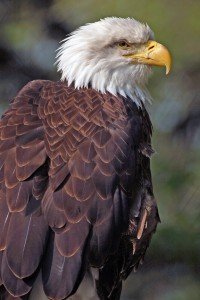
eagleFor each of the past three summers, I’ve participated in the Grandfather Mountain Nature Photography Weekend.

For those who don’t know, Grandfather Mountain, about 70 miles from Asheville near Boone and Blowing Rock, is a 720-acre privately-held nature preserve, the only privately-held property to be designated as an International Biosphere Reserve.

North Carolina owns 2,500 acres of the mountain’s undeveloped backcountry and operates it as a state park.

Part of the attraction is the animal habitat area. The habitat provides as wild a setting in which many of the visitors will ever see such animals live.

Wilma, a bald eagle who came to Grandfather Mountain in 1981 after being shot out west, was one of the habitat’s residents.

Wilma was at least 34 years old and had called the Grandfather Mountain animal habitat home longer than her habitat neighbor, Morely the golden eagle, the cougars, the bears, the deer and the river otters.

She was also one of the first subjects I photographed on each of my trips to the mountain.

I’ve always though there was something majestic about bald eagles. And Wilma, even though her injury left her without a wing and unable to fly, spent a lot of time sitting on one of the many perches in her habitat looking as majestic as any other.

But Wilma won’t be there the next time I visit Grandfather Mountain. She had to be put to sleep last week because of bad arthritis and declining health.

Sure, there will be other wonderful images to get on the mountain. But I know one I’ll miss.