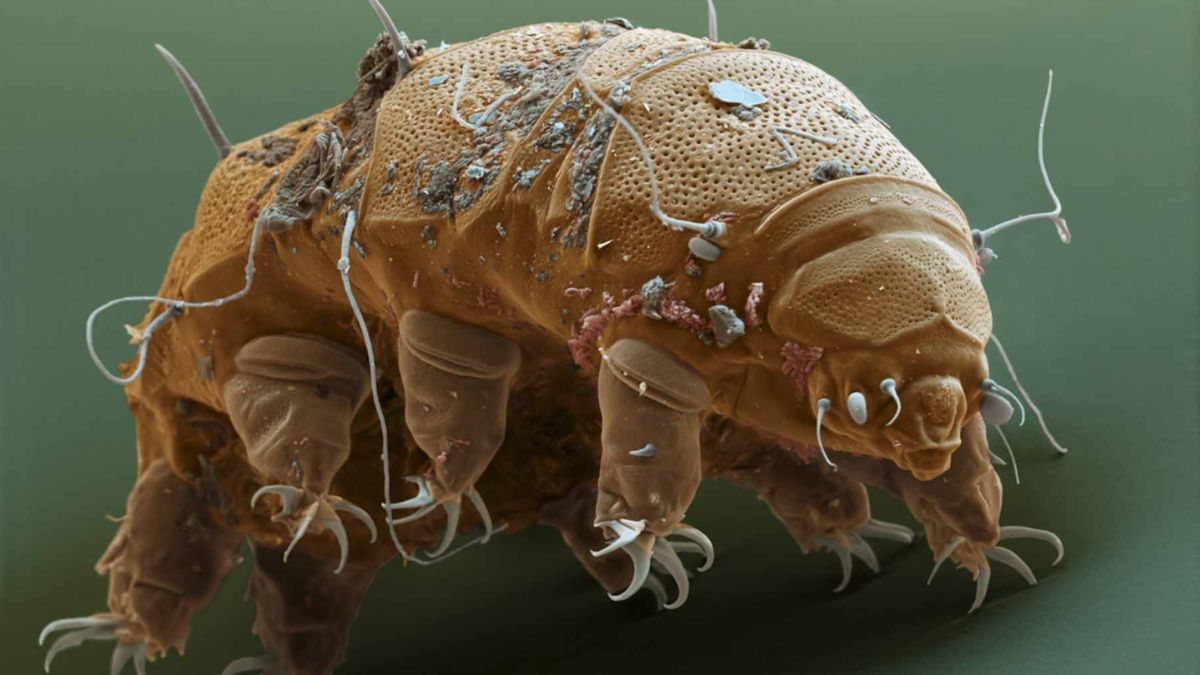
Tardigrades, often called “water bears,” are famous for surviving conditions that would destroy most living creatures.
These microscopic animals can endure extreme dryness, radiation, freezing, and other harsh environments by entering a dormant survival state known as cryptobiosis.

However, new laboratory research suggests that Mars-like dust may be far more dangerous to active tardigrades than expected.
In tests using simulated Martian soil, researchers found that these tiny creatures quickly lost activity, and one species showed no signs of life after only two days in the harsher dust mixture.
Why Scientists Tested Mars-Like Dust
Mars may appear calm and lifeless, but its surface dust contains chemicals that could be hostile to Earth organisms.

Scientists used two lab-made versions of Martian regolith, designed to imitate mineral dust found on the Red Planet.
The goal was not simply to test how tough tardigrades are. The bigger question was whether Earth organisms could accidentally survive on Mars if carried there by spacecraft, equipment, or future human missions.
This concern is known as forward contamination. It means Earth life could unintentionally reach another planet and interfere with scientific research or damage a potential alien environment.
Active Tardigrades Struggled Quickly

The study focused on tardigrades while they were active, not dormant. This is important because active organisms move, feed, and interact with their surroundings. If Earth life were ever to spread on Mars, it would need to function in an active state.
The results were clear. In both Martian dust simulants, the number of active tardigrades dropped sharply over four days. In the harsher mixture, known as MGS-1, no live Hypsibius exemplaris were found after two days.
Another simulant, OUCM-1, was less damaging, but it still affected activity. This suggests that the chemical makeup of Martian dust can play a major role in whether organisms survive.
A Clue Hidden in Washing the Dust
One of the most interesting findings came when researchers washed the MGS-1 dust before exposing tardigrades to it. After washing, the dust became much less harmful, and tardigrades remained active.
This suggests that the most damaging factor may be water-soluble. In simple terms, something toxic in the dust could be rinsed away.
The researchers believe the problem was not just acidity or ordinary saltiness, but possibly a specific chemical or group of chemicals.
Still, the exact toxic ingredient has not been identified. Physical effects, such as fine mineral particles covering the animals, may also have contributed.
What This Means for Planetary Protection
The findings could help scientists understand how Mars naturally limits contamination. If Martian surface dust can quickly disable even hardy organisms, it may reduce the risk of Earth creatures spreading accidentally on the planet.
But this does not mean Mars is fully self-sterilizing. Some microbes may survive in certain Martian-like conditions, especially if protected, diluted, or supported by suitable environments.
So, planetary protection rules remain essential. Space agencies must continue preventing contamination both ways: from Earth to Mars and from Mars back to Earth.
Why Mars Dust Is Also a Problem for Astronauts
The study also highlights a practical challenge for future human missions. Martian dust is not just a scientific concern; it could become a health and engineering problem.
Fine dust can stick to suits, tools, habitats, filters, and airlocks. If carried inside, it could affect skin, lungs, equipment, and living spaces.
Mars also contains salts such as perchlorates and chlorates, which can be hazardous to human health and may damage equipment.
For astronauts living on Mars for months, avoiding dust completely would be nearly impossible.
Future Farming on Mars Could Be Difficult
Long-term missions may need to grow food instead of relying entirely on supplies from Earth. But Martian regolith is not true soil.
It lacks organic matter, contains toxic compounds, and would need major treatment before supporting plants.
The tardigrade study shows that washing Martian dust can reduce harm in the lab. However, using water for this process on Mars would be complicated because water is limited and must be recycled carefully.
Final Thoughts
The new findings show that even tardigrades, some of Earth’s toughest creatures, may struggle against Mars-like dust when active.
This could help reduce the risk of Earth organisms contaminating Mars, but it also warns scientists about the dangers future astronauts may face.
Mars dust may act like a natural barrier to some life, yet it remains a major challenge for human health, equipment, and future farming plans.