DWP Confirms Six Medical Conditions That Could Receive Maximum PIP
 Merci
·
September 9, 2026
·
3 min read
New Department for Work and Pensions (DWP) figures show that 3,744,671 people across the UK were claiming Personal Independence Payment (PIP) as of April 2025.
However, people making a new claim may not realise how much the duration of a successful PIP award can vary. Awards can last for as little as nine months, while some claimants receive ongoing awards that are reviewed under the DWP’s “light touch” process after 10 years.
How Long Can a PIP Award Last?
PIP supports people living with long-term physical or mental health conditions, disabilities or learning difficulties where their condition affects everyday activities or mobility.
The duration of an award depends on the claimant’s individual circumstances and how their condition affects their daily life.
According to the PIP Handbook:
“The length of award will be based upon each claimant’s individual circumstances.”
Awards can range from around nine months to several years, while ongoing awards may be subject to a light-touch review approximately every 10 years.
DWP statistics group longer-term awards together under the category of five years or more.
PIP Awards Are Usually Reviewed
The DWP says most PIP awards are reviewed periodically, regardless of their original duration. Reviews are designed to check whether the claimant continues to receive the appropriate level of financial support.
However, some people receive limited-term awards of up to two years without a review date.
These are generally used when the claimant’s health condition or level of need could reasonably be expected to improve.
Who May Receive a Light Touch PIP Review?
Ongoing awards involving a light-touch review are generally considered for people whose circumstances are unlikely to change significantly.
This may include claimants who have:
- Very stable needs that are unlikely to change.
- High levels of need that are expected to remain the same or become worse.
- A planned award review date at or around State Pension age.
- A Special Rules for End of Life claim reaching review age when the claimant is of State Pension age.
DWP guidance states that these claimants would not normally be expected to undergo a face-to-face assessment during the review.
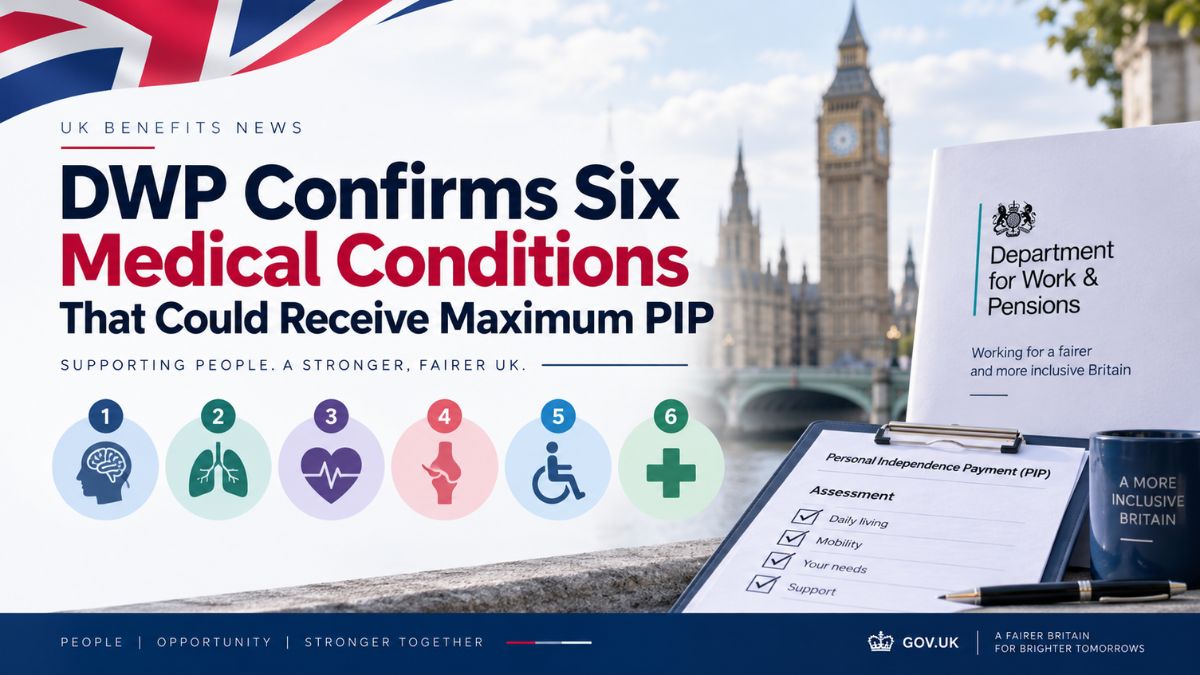
Six Conditions With High Levels of Long-Term PIP Awards
DWP figures for the end of April 2025 show that several condition groups have particularly high proportions of claimants receiving awards lasting five years or longer.
Visual Disease
There were 58,539 claimants recorded with visual diseases.
Of these, 38,112 had been awarded a light-touch review, with around 65% receiving an award lasting five years or longer.
General Musculoskeletal Disease
This category includes conditions involving muscles, joints and bones, including arthritis and joint or muscle pain.
There were 697,476 claimants, with 365,238 receiving a light-touch review.
Around 52% had awards lasting at least five years.
Neurological Disease
Neurological conditions can include illnesses such as epilepsy, multiple sclerosis and muscular dystrophy.
There were 472,121 claimants, including 252,214 with a light-touch review.
Around 53.4% had been granted an award of five years or longer.
Respiratory Disease
The figures show 137,957 PIP claimants with respiratory diseases.
Of these, 66,647 had a light-touch review, while approximately 48.3% had an award lasting five years or more.
Autoimmune Disease and Connective Tissue Disorders
There were 19,921 claimants within this category.
Around 9,310 had been given a light-touch review, with 46.7% receiving awards lasting five years or longer.
Regional Musculoskeletal Disease
Regional musculoskeletal conditions accounted for 440,684 claimants.
Around 202,317 had received a light-touch review, while approximately 46% had awards lasting five years or more.
Total PIP Claimant Figures
Across all conditions, the April 2025 figures recorded:
- 3,744,671 total PIP claimants
- 1,631,688 claimants with a light-touch review
- Around 44% of claimants receiving awards lasting five years or longer
These figures demonstrate that long-term awards are relatively common, although receiving one depends on the claimant’s individual circumstances rather than simply their diagnosis.
Current PIP Payment Rates
PIP is made up of a daily living component and a mobility component.
The weekly rates are:
Daily living component
- Lower rate: £73.90
- Higher rate: £110.40
Mobility component
- Lower rate: £29.20
- Higher rate: £77.05
Depending on the components awarded, PIP can be worth between £29.20 and £187.45 per week.
The maximum award for somebody receiving the highest rates of both components is £749.80 every four weeks.
PIP awards do not have a standard duration. Depending on a claimant’s circumstances and how their health condition affects everyday life, an award can last from around nine months to several years or continue on an ongoing basis with a light-touch review.
DWP figures show that people with visual, neurological and musculoskeletal conditions are among those most likely to receive awards lasting five years or longer. However, every PIP decision is based on the individual’s needs and how their condition affects their independence.
