What to Do the Moment a Debt Collector Calls: Your Rights, Explained
 Merci
·
May 29, 2026
·Updated August 20, 2026
·
6 min read
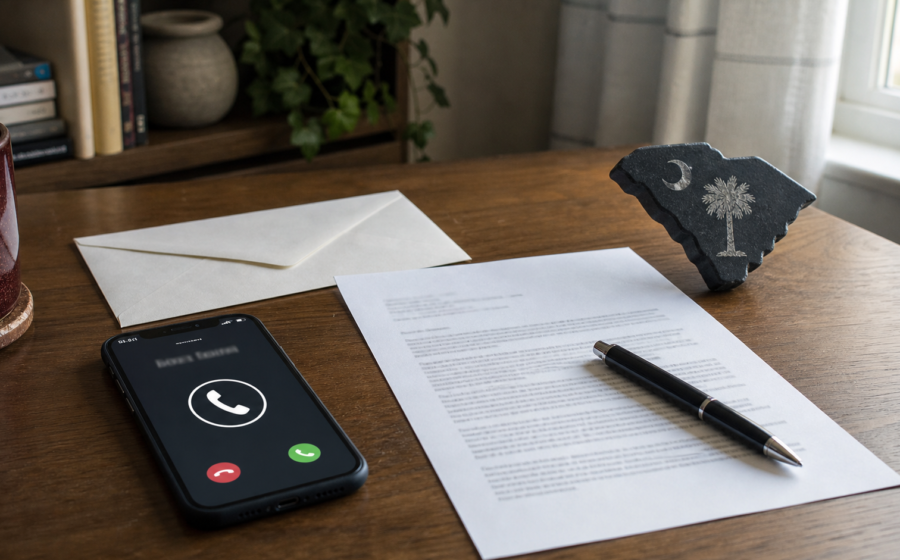
A collection call rarely comes at a good time, and the person on the other end is trained to make you feel like you have no options. You have more than you think — some of them written into federal law, one of them specific to South Carolina and not widely known even among people who’ve been dealing with collectors for years.
The call itself is regulated, not just the debt
The Fair Debt Collection Practices Act (FDCPA) doesn’t just say collectors have to eventually stop — it puts real limits on the call itself. A collector cannot contact you before 8 a.m. or after 9 p.m. your time, and they can’t call you at work if they know your employer doesn’t allow personal calls. They can’t call repeatedly with the intent to annoy or harass, contact you by text or email in ways designed to wear you down, or discuss your debt with your employer, neighbors, or family members beyond confirming basic contact information. If you’ve hired an attorney and the collector knows it, they’re legally required to route all further contact through the attorney — not you.
None of that requires a lawyer to invoke. It requires you to know it’s true.
You can legally make them stop calling
This is the part most people don’t use. Under the FDCPA, you have the right to tell a debt collector, in writing, to stop contacting you. Once they receive that letter, they’re limited to one final contact — to confirm they’ll comply, or to tell you they’re taking a specific action like filing a lawsuit. A phone call asking them to stop can work in the moment (“if you tell them a call is inconvenient, they’re required to end it,” per the Consumer Financial Protection Bureau), but a written cease-contact letter, sent certified mail so you have proof of delivery, is the version that holds up if they don’t comply and you need to escalate.
Important nuance: telling a collector to stop contacting you does not make the debt disappear, and it doesn’t stop them from pursuing legal action if they’re entitled to. It stops the calls — which, for a lot of people, is most of the actual harm being done in the moment.
What they’re not allowed to say
Collectors cannot falsely claim to be attorneys or government officials, cannot misstate how much you owe, cannot threaten arrest or legal action they don’t actually intend to take, and cannot claim you’ll be arrested for not paying — that’s not how debt works in the United States, and any collector implying otherwise is violating federal law on the spot. If a call includes any of that, write down the date, time, what was said, and the number that called — it’s the foundation of a complaint.
The South Carolina rule almost nobody mentions
Here’s the one that’s easy to miss even in general debt-rights guides: South Carolina currently prohibits wage or property garnishment for the collection of most consumer debts. Elsewhere in the country, a creditor who sues and wins a judgment can often garnish your paycheck directly. In South Carolina, for most everyday consumer debt — credit cards, medical bills, personal loans — that tool generally isn’t available to them, per the state Department of Consumer Affairs. It’s a meaningful piece of leverage in a conversation that’s designed to make you feel like you have none, though there are exceptions (fitting into a “most debts” carve-out — child support, taxes, and some other categories are handled differently), so it’s not a blanket shield against every collection tactic.
Putting the cease-contact letter in writing
A phone request can stop a single call. A written letter is what creates a record. It doesn’t need to be complicated:
“This letter is to inform you, [Collector Name], that I am exercising my right under the Fair Debt Collection Practices Act to request that you cease all further communication with me regarding [account/reference number, if known]. Please direct any further communication in writing only, or as otherwise permitted by law.”
Send it certified mail with return receipt, and keep a copy along with the receipt. That combination — the letter and proof it was received — is what matters if a collector ignores the request and you need to show a regulator or a court that you invoked the right and they didn’t comply.
A few things this right doesn’t do
It’s worth being direct about the limits, because overpromising on rights content erodes trust fast. A cease-contact letter stops the calls; it does not erase the debt, stop interest or fees a contract already allows, or prevent a collector from filing a lawsuit if they’re legally entitled to pursue one — the letter limits contact, not legal action. It also only binds the specific collector or agency you sent it to; if the debt is later sold to a different collection agency, the new one isn’t automatically bound by a letter sent to the last one, and the same request would need to go to them directly.
Quick answers to what comes up most
Does ignoring the calls make the debt go away? No — it stops nothing on the debt itself, and depending on the type of debt, it can eventually lead to a lawsuit. Ignoring the calls and formally invoking your right to stop contact are different things with very different effects.
Can they call my family or friends? Only to try to locate you, and even then they generally can’t tell those people you owe a debt or discuss any details — repeated contact with third parties beyond a basic location request is itself a violation worth documenting.
Do I have to answer the phone to invoke my rights? No. The written letter works whether or not you’ve ever picked up a single call — it doesn’t require an in-the-moment conversation.
What if I’m not sure the debt is even mine? You have the right to request debt validation — written proof of the debt, the amount, and the original creditor — within 30 days of first being contacted. A collector who can’t or won’t produce that after a validation request is a strong signal something is wrong with the claim.
If a collector crosses a line
You have two places to send a complaint, and it’s worth doing both:
- South Carolina Department of Consumer Affairs — (803) 734-4200 or toll-free (800) 922-1594, Monday–Friday, 8:30 a.m.–5 p.m., or file online at consumer.sc.gov. This is the state regulator, and complaints here can trigger action against collectors operating in South Carolina specifically.
- Federal Trade Commission — for violations of the federal FDCPA, which applies nationwide.
Keep records as you go: dates and times of calls, names given, what was said, and any letters received. A documented pattern is worth far more than a single “they were rude to me” complaint, both to regulators and to an attorney if it comes to that.
The one-page version
Before 8 a.m. or after 9 p.m., they can’t call. At work, if your employer bans personal calls, they can’t call. Once you’ve hired a lawyer, they have to go through the lawyer, not you. A written cease-contact letter — sent certified — legally limits further contact. They can’t threaten arrest or misstate what you owe. And in South Carolina, most everyday consumer debt collectors currently can’t garnish your wages, a protection that doesn’t exist in a lot of other states.
None of this makes debt vanish. What it does is put you back on even footing for the conversation — which is usually the part that feels the most out of control.
